
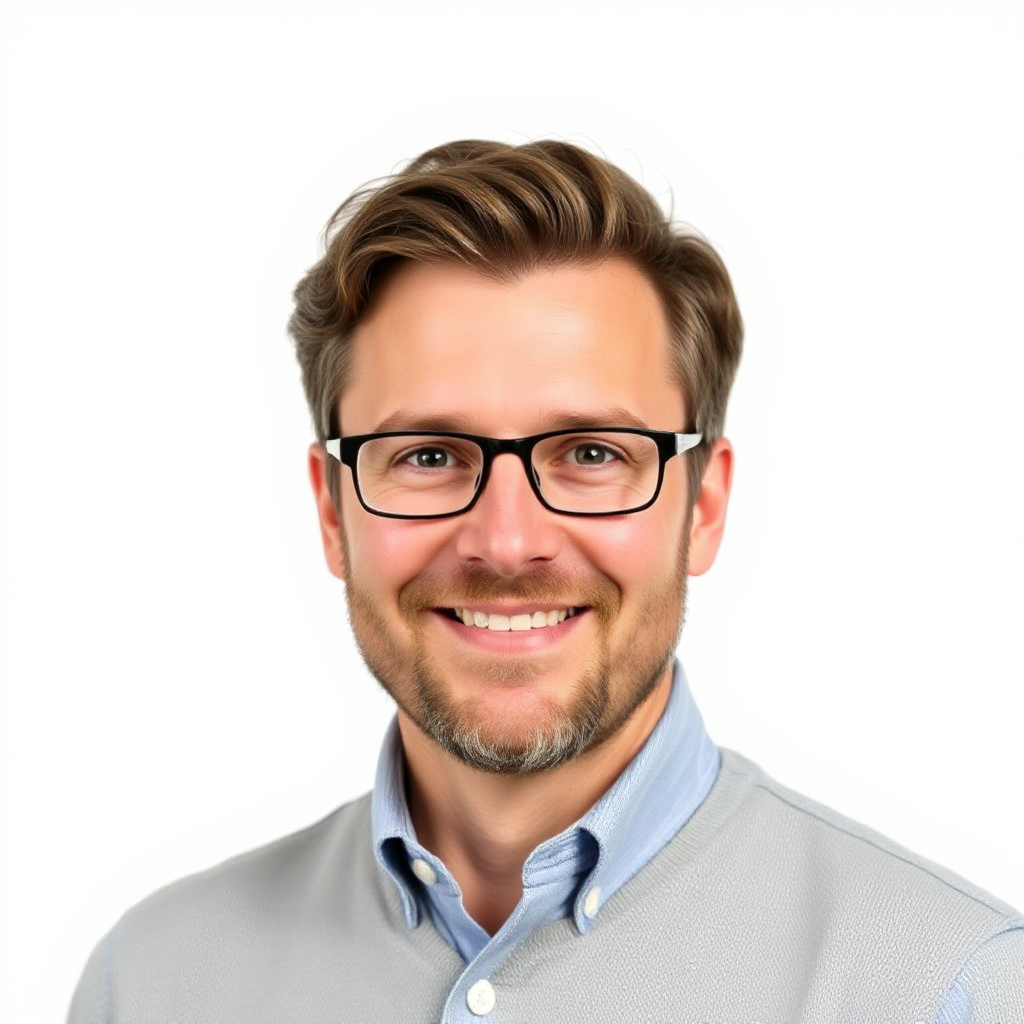
The former US second-in-command Dick Cheney, who died at the age of 84, was regarded as among the most significant incumbents of that office in US history. While countless vice-presidents had to settle for peripheral or ceremonial roles, Cheney wielded huge influence during the administration of George W Bush, so much so that he was frequently referred to as the "real president".
Bush disliked such a characterisation and said the dynamic was more complicated. He observed that Cheney was respectful, invariably addressing him in public settings as President, while he called him as Dick. Bush disputed even characterisations of their association as a collaboration because it implied that they were equals. Despite these denials, Cheney viewed the laidback president malleable on a whole raft of administrative determinations.
A Aftermath of 9/11
In charge of a contingent of neo-cons that encompassed defence secretary Donald Rumsfeld and assistant defense secretary Paul Wolfowitz, he strongly advocated the invasion of Iraq in 2003 in answer to the 9/11 attacks on New York and Washington. During of the 9/11 assault, Bush had been attending a session at a school in Florida. As Bush headed for a secure location in Nebraska, Cheney took charge, directing the shooting down of any unidentified airplanes nearing the US Capitol.
Cheney stated the attacks changed him, causing him to be focused on revenge. In conjunction with other conservative figures, like Rumsfeld and Wolfowitz, he advocated for a takeover of Afghanistan in an attempt to capture Osama bin Laden. Cheney then vigorously pushed for the armed intervention of Iraq, even though there was no evidence of Saddam Hussein having involvement.
Controversial Decisions
He voiced no apologies about the invasion, in which an estimated 100,000 Iraqis perished, or about the enhanced interrogation of individuals rounded up after 9/11. He informed CNN in 2015 that the Iraq military action, which was based on faulty intelligence echoed by Cheney, was the proper course of action. "It proved to be the right thing to do back then. I believed it at the time and I maintain that stance today."
Yet during that period, there were dissenting voices at a high level about the botched execution of Iraq. One of the White House's own delegates to the region, General Anthony Zinni (2001-03), was dismissed from the position. "I witnessed, as a baseline," he wrote later "true dereliction, carelessness, and recklessness: potentially, deception, ineptitude, and graft."
Additional Factors
Cheney was not solely accountable for the Iraq campaign. Even before 9/11, Wolfowitz had pushed for similar measures. He had written a document setting out circumstances in which US concerns might be threatened (featuring "access to vital raw materials, mainly Persian Gulf oil"). Wolfowitz had argued that "America should be postured to act independently when collective action prove impossible," particularly referencing defense operations against Iraq.
Bush too had entered the presidency generally inclined on implementing what his parent had notably declined to do in 1991; overthrow Saddam. Subsequent to he had been sacked by the White House, the Treasury head Paul O'Neill recounted how, at the opening session of the National Security Council in January 2001, Bush had announced his plan of lowering America's involvement in the Middle East dispute and suggested military action against Iraq.
Bush held a personal grudge against Saddam, believing he had been responsible for a plot to murder his father, President George HW Bush, on a journey to Kuwait in 1993. He also objected to that one of the most prominent hotels in Baghdad had a floor mural with a likeness of his parent's face that everyone had to step on.
Questioning Techniques
Yet it was Cheney who was among the most outspoken supporting attacking Iraq, frequently citing intelligence reports that were either weak or totally deceptive. He supported what the Bush government politely called as "enhanced interrogation", the employment of waterboarding and torture.
Responding to a Senate document in 2014 that found that no actionable intelligence had been obtained through the interrogation methods, Cheney disregarded the findings as "loaded with crap". He stated to Fox News: "We requested [the CIA] to take steps and establish programmes to catch the perpetrators who murdered 3,000 of us on 9/11 and make sure it was not repeated. That is precisely what they did and they earn a lot of credit."
Public Image
Cheney reveled in monikers assigned to him by critics such as the dark character and The Prince of Darkness, and by the notion that he was a shadow power manipulating Bush. In the author's 2013 publication about the pair, Days of Fire: Bush and Cheney in the White House, Cheney is reported as stating: "Am I the evil genius in the corner that nobody ever sees emerge from his lair? This represents a advantageous way to work, in fact."
Corporate Connections
Debate over his commercial relationships followed him throughout his time as vice-president. While he had limited background in business but good contacts in military, notably in Saudi Arabia, he was invited to join Halliburton, one of the world's most substantial energy companies, in 1995 as chairman and CEO.
In 2000 he became Bush's election partner for the White House. Debatably, during the military campaign, Halliburton was given US agreements valued at multiple billions.
It significantly boosted his finances. His yearly earnings during his time at the firm grew from his $258,394 during his time as defence secretary to $4.4m. When he left in 2000 he had a compensation package valued at in excess of $20m|twenty

